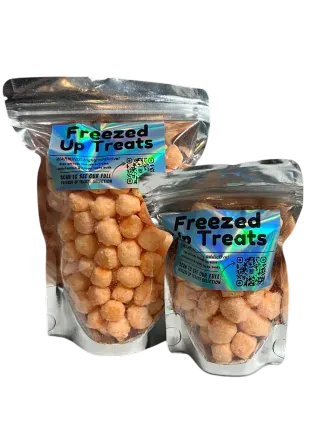

How Freeze-Dried Unicorn Turds Are Made
The transformation seems almost too dramatic to be simple. A soft, dense, chewy candy goes in, and a light, colorful, crunchy puff comes out. So how are freeze-dried Unicorn Turds made, exactly? The honest answer is that it is a straightforward, patient process with no additives and no trickery. It comes down to cold, low pressure, and a lot of time. Here is the whole thing in plain English.
It starts with the real candy
Everything begins with the actual Unicorn Turds candy: colorful, sweet, and fruity in its original chewy form. This matters because freeze-drying does not add or invent flavor. It only removes moisture. Whatever candy you start with is what you end up with, just transformed in texture. Start with a good, flavorful candy and you get a good, flavorful crunch. There is no flavor spray or coating involved, which is exactly why the finished treat tastes like a more intense version of the original rather than something artificial.
Step one: freeze it solid
The first real step is a deep freeze. The candy is frozen completely solid before anything else happens, and this is what protects the shape and color through the rest of the process. Freezing locks everything in place so that nothing slumps, runs, or loses its form once the moisture starts to leave. Because the candy is rock solid going in, it holds its structure the whole way through, which is why the finished pieces keep that fun, puffy look.
Step two: drop the pressure
This is the heart of freeze-drying, and it is the part that feels like magic. The frozen candy goes into a chamber where the air pressure is lowered far below normal. Under that very low pressure, the frozen moisture does something it cannot do in your kitchen. It turns straight from solid ice into vapor without ever passing through a liquid stage. That direct ice-to-vapor shift is called sublimation, and it is the entire secret behind the crunch.
Step three: the air pockets form
As the moisture leaves as vapor, it does not collapse the candy. Instead it leaves behind thousands of tiny empty air pockets throughout each piece, like a microscopic honeycomb. The candy becomes light and porous where it used to be dense and chewy. Those air pockets are the crunch waiting to happen. When you later bite down, they all collapse at once, producing the crisp, loud snap that makes these so fun to eat. No crunch is added; it is simply what the structure becomes once the water is gone.
Step four: take the time
Here is where patience earns its keep. You cannot rush sublimation. At Freezed Up Treats, each batch takes 30 or more hours from start to finish. That long, slow process is the difference between a clean, evenly crisp treat and one that comes out chalky or soft in the middle. Plenty of mediocre freeze-dried snacks exist because someone tried to hurry the process. The extra hours are unglamorous, but they are exactly what makes the texture come out right, every time.
Step five: seal in the crunch
The final step is protection. The instant the candy comes out light and crunchy, it gets sealed in a moisture-proof bag. This is essential, because the same air pockets that create the crunch are eager to pull moisture right back out of the air. Leave a finished piece exposed and it slowly softens. Sealed and dry, it stays crisp and shelf-stable for a long time, which is why you can keep a bag in the pantry and crack it open weeks later to the same loud crunch.
Why not just use heat?
A fair question is why not dry the candy faster with heat. The answer is that heat would melt and ruin a soft candy long before it dried, destroying the shape and the color. Freeze-drying uses cold and low pressure specifically so the candy never melts. The structure stays intact, the bright colors survive, and all those crunch-making air pockets are preserved. The slow, cold method is the only one that turns a chewy candy into a crisp one instead of a puddle.
No additives, just physics
One of the nicest things about how freeze-dried Unicorn Turds are made is what is missing from the process. There are no preservatives added to create the long shelf life and nothing sprayed on to make the crunch. The shelf life and the texture both come from the simple act of removing moisture. It is physics doing the work, not a chemistry set, which is part of why so many people feel good about snacking on them.
How to tell a well-made batch
Once you understand the process, you can taste the difference between a careful batch and a rushed one. A well-made freeze-dried Unicorn Turd is evenly crisp all the way through, with no chewy or dense spot in the middle that would signal leftover moisture. The color stays bright, and the flavor is clean rather than stale or flat. Those qualities come straight from taking the full 30-plus hours instead of cutting the process short. If a freeze-dried candy ever feels chalky or has a soft center, it usually means the drying was hurried somewhere along the way. Taking the time is the whole difference, and it is the standard each batch here is held to. It is also why quality varies so much between makers: the equipment matters, but the patience matters more, and patience is the part that is easy to skip and hard to fake. When the process is respected, the result speaks for itself in the very first crunch.
Taste the patience
That is the entire story: start with real candy, freeze it solid, drop the pressure so the ice vanishes into vapor, let the air pockets form, give it 30-plus hours of patience, and seal in the crunch. Knowing the process does not make that first bite any less fun, but it does explain why a candy that sounds impossible is sitting crunchy in your pantry. If you want to taste 30-plus hours of patience for yourself, the Unicorn Turds collection is the place to start. Free shipping over $30, and FREEZEOFF15 takes 15% off your first order.
Ready to Crunch?
Taste the result of 30+ hours of patience.